AI for Humanities

The multi-dimensions of world languages, arts, and cultures.

This interdisciplinary course examines Artificial Intelligence as both a creative medium and a cultural force. Students explore how AI can expand humanities research, teaching, and public-facing applications while asking how the humanities can shape more responsible, reflective, and human-centered AI.

Through guest lectures, discussion-based seminars, hands-on workshops, and collaborative projects, the course connects world languages, arts, cultural analysis, storytelling, design, ethics, and emerging technology. Students learn to move between technical experimentation and humanistic interpretation, using AI not only as a tool, but also as a subject of inquiry.

How can AI enrich the field of Humanities research, teaching, and applications?
What perspectives can Humanities studies offer to the development of AI?
Course Mode

Expert-led lectures, seminar discussions, creative workshops, and a team-based capstone project.

Student Output

AI for Humanities projects that combine cultural insight, ethical reflection, and prototype-driven making.

Core Tension

AI can generate, classify, predict, and simulate. Humanities asks what these systems mean, whom they serve, and how they shape human agency.

Learning Goal

Develop the literacy to use AI creatively and the judgment to evaluate its cultural, social, and ethical consequences.

The Piper feature about AI for Humanities AI for Humanities students standing in front of a watercolor painting

Featured Across CMU

The Piper + CMU Engineering

AI for Humanities was featured by The Piper, CMU’s internal newsletter, in the July 11, 2024 story “New Dietrich Course Harnesses AI To Kindle Creativity,” which introduces the course as preparing the next generation to understand AI’s impact from a human perspective.

The College of Engineering article “New course harnesses AI to kindle creativity” further describes how the course explores AI’s role in creative expression, cultural understanding, and human-centered technology education.

Together, the features frame the course around three linked areas: large language models and creative writing, generative models and artistic expression, and social and cultural voyages with AI.
Team

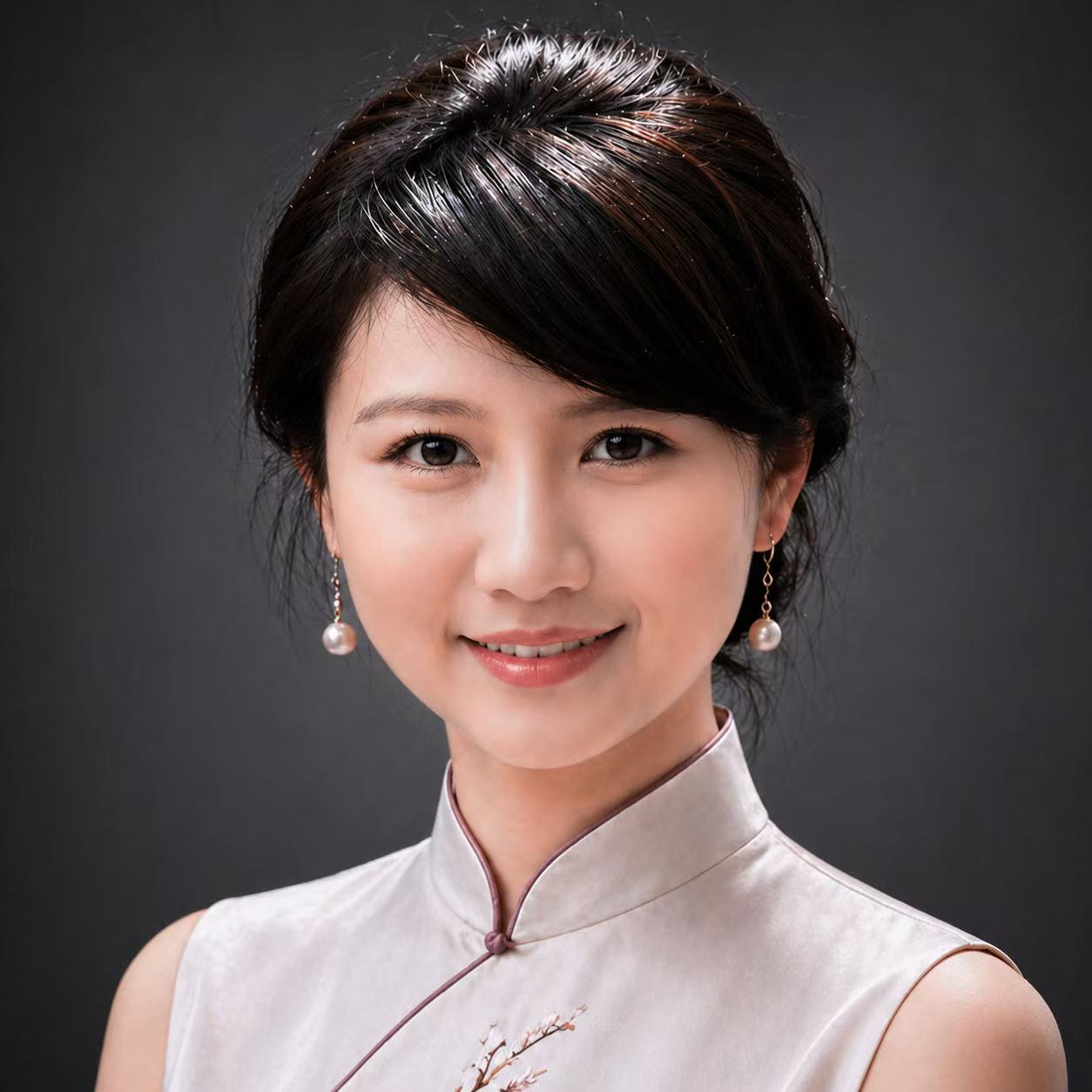
Ting Su

Ting Su

Special Faculty, Carnegie Mellon University

Ting Su is a Special Faculty member at Carnegie Mellon University and founder and CEO of Supacademy. Her work develops new paradigms for humanities and aesthetic education in the age of artificial intelligence, emphasizing human wisdom, ethical agency, cultural depth, and technological imagination.

She leads the INNOVARES Interdisciplinary Research Program and contributes to Carnegie Mellon’s Global Cultures and Emerging Technology ecosystem. Across her work, she advances “worldmaking” as a central intellectual practice for exploring how computational systems and humanistic inquiry shape knowledge, meaning, and agency.

AI + Humanities Aesthetic Education Worldmaking
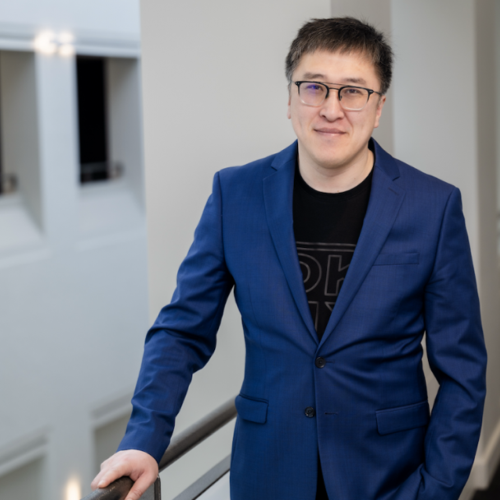
Gang Liu

Gang Liu

Director of Undergraduate Studies, LCAL, CMU

Gang Liu is a Teaching Professor of Chinese Studies at Carnegie Mellon University and the Director of Undergraduate Studies in the Department of Languages, Cultures and Applied Linguistics. He has developed and taught Chinese language courses at all levels and content courses spanning language, culture, poetry, thought, documentary film, popular culture, and digital media.

His interdisciplinary teaching includes AI for Humanities, Multimedia Narratives, Story + Game Lab, VR/AR storytelling, and Chinese mythology animation creation. He co-edited or authored four books published by Peking University Press and is the author of the bestselling children’s book series Luoluo Ting’s Adventure in Ancient Chinese Mythology.

Chinese Studies Digital Storytelling Mythology
Ding Zhao

Ding Zhao

Associate Professor, Mechanical Engineering, CMU

Ding Zhao is an Associate Professor in Carnegie Mellon University’s Department of Mechanical Engineering, with courtesy appointments in Civil and Environmental Engineering, the Computer Science Department, and the Robotics Institute. He leads the CMU Safe AI Laboratory, which develops trustworthy AI for high-stakes physical systems.

His research connects machine learning theory with engineering systems for autonomous vehicles, robotics, sustainable grids, healthcare, manufacturing, and care applications. At CMU, Zhao also created the Trustworthy AI Autonomy course, strengthening the bridge between humanities questions about responsibility and engineering methods for safety.

Safe AI Robotics Trustworthy Autonomy

Pathway

01 / Expert Input

Lecture

Students engage with experts from CMU and industry to understand how AI reshapes language, art, culture, creativity, ethics, and human-centered technology.

  • Guest speakers from humanities, engineering, business, policy, and language technology.
  • Case studies on generative AI, causality, robotics, creative systems, and social impact.
  • Short response prompts connect technical ideas with cultural questions.
Guest lecture on AI, causality, and policy making
02 / Guided Practice

Workshop

Each topic is followed by in-depth discussion, experimentation, and seminar-style activities that connect AI tools with humanistic interpretation.

  • Students test AI tools through writing, visual generation, data interpretation, and critique.
  • Seminars ask what AI reveals, hides, amplifies, or distorts about culture.
  • Prototype sketches turn abstract questions into visible design directions.
Workshop session on AI prototyping and discussion
03 / Public Artifact

Capstone Project

Students form teams to develop original AI for Humanities projects that synthesize technical exploration, cultural analysis, and creative production.

  • Teams define a humanistic problem, audience, dataset, and creative or analytical method.
  • Projects combine research framing, AI experimentation, ethical reflection, and storytelling.
  • Final work is presented as a prototype, research narrative, or venture-style concept.
Students collaborating on an AI for Humanities capstone project

AI4H Lab

Screenshot of ToledoAI scientific translation project

ToledoAI

A scientific translation platform designed to make research more globally accessible. Students framed language as an equity issue in knowledge production, combining document translation, domain-specific terminology, and interactive reading support.

Screenshot of ArguMate debate coach project

ArguMate

An AI debate coach that helps students practice argumentation with lifelike opponents, speech-to-text input, real-time feedback, and voice responses. The project turns persuasive communication into an interactive learning loop.

Screenshot of GrowthDM marketing strategy project

GrowthDM

A growth strategy assistant that uses AI to translate business context into content ideas, campaign plans, and marketing recommendations. It demonstrates how students can build practical workflow tools around audience, budget, goals, and constraints.

Screenshot of Cherokee and Quechua Translator project

Language Pi

A Cherokee and Quechua translation assistant focused on low-resource and Indigenous language access. The project connects AI prototyping with cultural preservation, language learning, and questions of representation in computational systems.

Screenshot of At Issue AI-powered news analysis project

At Issue

An AI-powered news analysis tool that helps users explore current issues through multiple perspectives, stakeholder viewpoints, key questions, and contextual Q&A. It reframes news literacy as a practice of comparison and interpretation.

Screenshot of ScoliosisAI early detection project

ScoliosisAI

A student patient-led project that uses mobile apps, AI capabilities, phone-based measurement, and community support to make early scoliosis detection more convenient and accessible for households around the world.

Echoes

“Unlike the restrictive approach often taken towards generative AI, Professor Su encouraged us to explore and utilize these tools, emphasizing their potential to enhance learning and innovation.” Bryan · 2024 Summer 2
“Most of my exposure to artificial intelligence was in classroom settings, so it’s interesting to learn about the societal impacts.” Jamie · 2024 Spring
“I truly enjoyed every session and learned so much about the field. Your teaching style and dedication made the class both engaging and highly informative.” Ryan · 2024 Summer
“The program gave me a comprehensive understanding of the relationship between AI and humanities, including arts and language. It allowed me to step out of my comfort zone.” Keynes · 2024 Summer
“I realized the powerful potential of Digital Humanities—technology and humanism are not opposites, but forces that can truly intertwine and illuminate one another.” Everly · 2025 Summer
“This class was far more than just a learning experience for me; it was a gateway to exploring the powerful intersection of AI technology and the humanities.” Sue · 2025 Summer